
On Sunday morning in the UK the hour between 1am and 2am will simply disappear. No witchcraft will have occurred, of course, we will simply have put the clocks forward an hour and moved onto British Summer Time (known as Daylight Saving Time – DST hereafter – in the USA and Canada) for the better part of six months. But when did we start doing this, and why? As an adjunct to my series on time I thought that this was a subject worth delving into a little more.
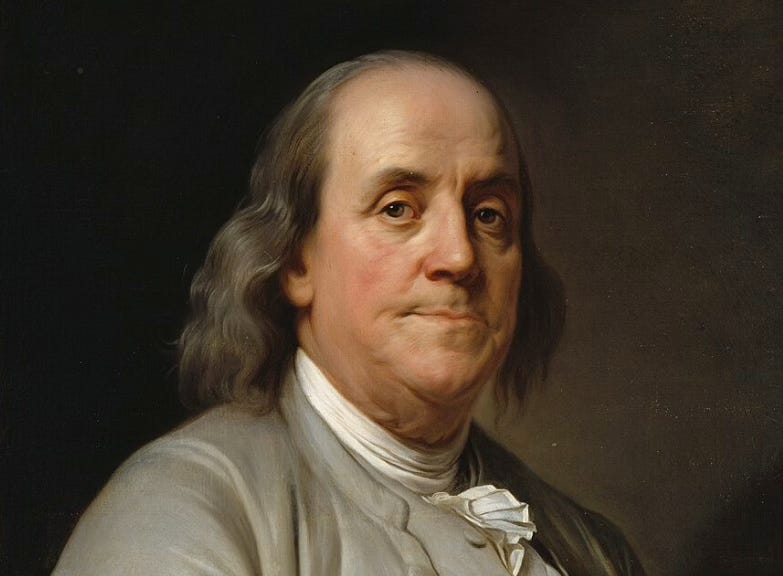
If you are American you may have been taught that the concept was invented by Benjamin Franklin whilst living in France and well, err, that isn’t really true. What he did do is write an amusing, satirical, letter to The Journal of Paris in 1784 which was more a comment upon what he perceived as the slothfulness of French (specifically the late-rising Parisians) and how the result of spending more hours conscious during the hours of darkness than strictly necessary led to the wasteful consumption of candles.1 He begins his letter by expressing astonishment at how early the sun arose:
I went home, and to bed, three or four hours after midnight, with my head full of the subject. An accidental sudden noise waked me about six in the morning, when I was surprised to find my room filled with light; and I imagined at first, that a number of those lamps had been brought into it; but, rubbing my eyes, I perceived the light came in at the windows. I got up and looked out to see what might be the occasion of it, when I saw the sun just rising above the horizon, from whence he poured his rays plentifully into my chamber, my domestic having negligently omitted, the preceding evening, to close the shutters.
I looked at my watch, which goes very well, and found that it was but six o’clock; and still thinking it something extraordinary that the sun should rise so early, I looked into the almanac, where I found it to be the hour given for his rising on that day. I looked forward, too, and found he was to rise still earlier every day till towards the end of June; and that at no time in the year he retarded his rising so long as till eight o’clock. Your readers, who with me have never seen any signs of sunshine before noon,2 and seldom regard the astronomical part of the almanac, will be as much astonished as I was, when they hear of his rising so early; and especially when I assure them, that he gives light as soon as he rises. I am convinced of this. I am certain of my fact. One cannot be more certain of any fact. I saw it with my own eyes. And, having repeated this observation the three following mornings, I found always precisely the same result.
He then turns his brilliantly analytical brain to the challenge of calculating quite how much this cost the city, should all other residents follow his behaviours:
This event has given rise in my mind to several serious and important reflections. I considered that, if I had not been awakened so early in the morning, I should have slept six hours longer by the light of the sun, and in exchange have lived six hours the following night by candle-light; and, the latter being a much more expensive light than the former, my love of economy induced me to muster up what little arithmetic I was master of, and to make some calculations, which I shall give you, after observing that utility is, in my opinion the test of value in matters of invention, and that a discovery which can be applied to no use, or is not good for something, is good for nothing.
I took for the basis of my calculation the supposition that there are one hundred thousand families in Paris, and that these families consume in the night half a pound of bougies, or candles, per hour. I think this is a moderate allowance, taking one family with another; for though I believe some consume less, I know that many consume a great deal more. Then estimating seven hours per day as the medium quantity between the time of the sun’s rising and ours, he rising during the six following months from six to eight hours before noon, and there being seven hours of course per night in which we burn candles, the account will stand thus; [calculations excluded for brevity] …makes the sum ninety-six millions and seventy-five thousand livres tournois. An immense sum! that the city of Paris might save every year, by the economy of using sunshine instead of candles.
Knowing his fellow Parisians well, he then suggests some somewhat absurdist measures to ensure that they got out of bed at daybreak:
I believe all who have common sense, as soon as they have learnt from this paper that it is daylight when the sun rises, will contrive to rise with him; and, to compel the rest, I would propose the following regulations;
First. Let a tax be laid of a louis per window, on every window that is provided with shutters to keep out the light of the sun.
Second. Let the same salutary operation of police be made use of, to prevent our burning candles, that inclined us last winter to be more economical in burning wood; that is, let guards be placed in the shops of the wax and tallow chandlers, and no family be permitted to be supplied with more than one pound of candles per week.
Third. Let guards also be posted to stop all the coaches, &c. that would pass the streets after sunset, except those of physicians, surgeons, and midwives.
Fourth. Every morning, as soon as the sun rises, let all the bells in every church be set ringing; and if that is not sufficient?, let cannon be fired in every street, to wake the sluggards effectually, and make them open their eyes to see their true interest.
This was all very much tongue-in-cheek but he was hinting at something he considered important beneath the wit (after all this is the man who coined the phrase “early to bed, early to rise, makes a man healthy, wealthy, and wise”.3 But there is nothing in his letter that involved changing the actual time. In Europe at the end of the 18th century, much like the Roman Empire two thousand years earlier, people didn’t tend to follow the times shown on clocks, rather they would order their days by the passage of the sun, there wasn’t yet standardised time that was religiously followed.
An early hint at DST came 26 years later in 1810 when the Spanish National Assembly enacted a resolution to move some meetings forward by an hour between the 1st of May and the 30th of September – but this was a behaviour change, not a temporal one. It was only at the end of the 19th century when we see the first real proposal to change the clocks. George Hudson (1867–1946) was a New Zealand entomologist who did shift work in order to free up time to catch bugs in his off-hours. Irked at the lack of daylight hours in summer evenings he proposed pushing the time forwards by two hours at a meeting of the Wellington Philosophical Society in 1895. It think that it is fair to say this was not received with rapturous enthusiasm:
The author proposed to alter the time of the clock at the equinoxes so as to bring the working-hours of the day within the period of daylight, and, by utilising the early morning, so reduce the excessive use of artificial light which at present prevails.
Mr. Travers said the clocks could be managed by having different hands. He did not think we were far enough advanced to adopt the plan advocated by the author of the paper.
Mr. Harding said that the only practical part of Mr. Hudson’s paper had long since been anticipated by Benjamin Franklin4, one of whose essays denounced the extravagance of making up for lost daylight by artificial light. Mr. Hudson’s original suggestions were wholly unscientific and impracticable. If he really had found many to support his views, they should unite and agitate for a reform.
Mr. Maskell said that the mere calling the hours different would not make any difference in the time. It was out of the question to think of altering a system that had been in use for thousands of years, and found by experience to be the best. The paper was not practical.
Mr. Hawthorne did not see any difficulty in carrying out the views advocated so ably by Mr. Hudson.
Mr. Hustwick was of opinion that the reform spoken of would have to wait a little longer.
Mr. Richardson said that it would be a good thing if the plan could be applied to the young people.
Mr. Hudson, in reply, said that he was sorry to see the paper treated rather with ridicule. He intended it to be practical. It was approved of by those much in the open air. There would be no difficulty in altering the clocks.
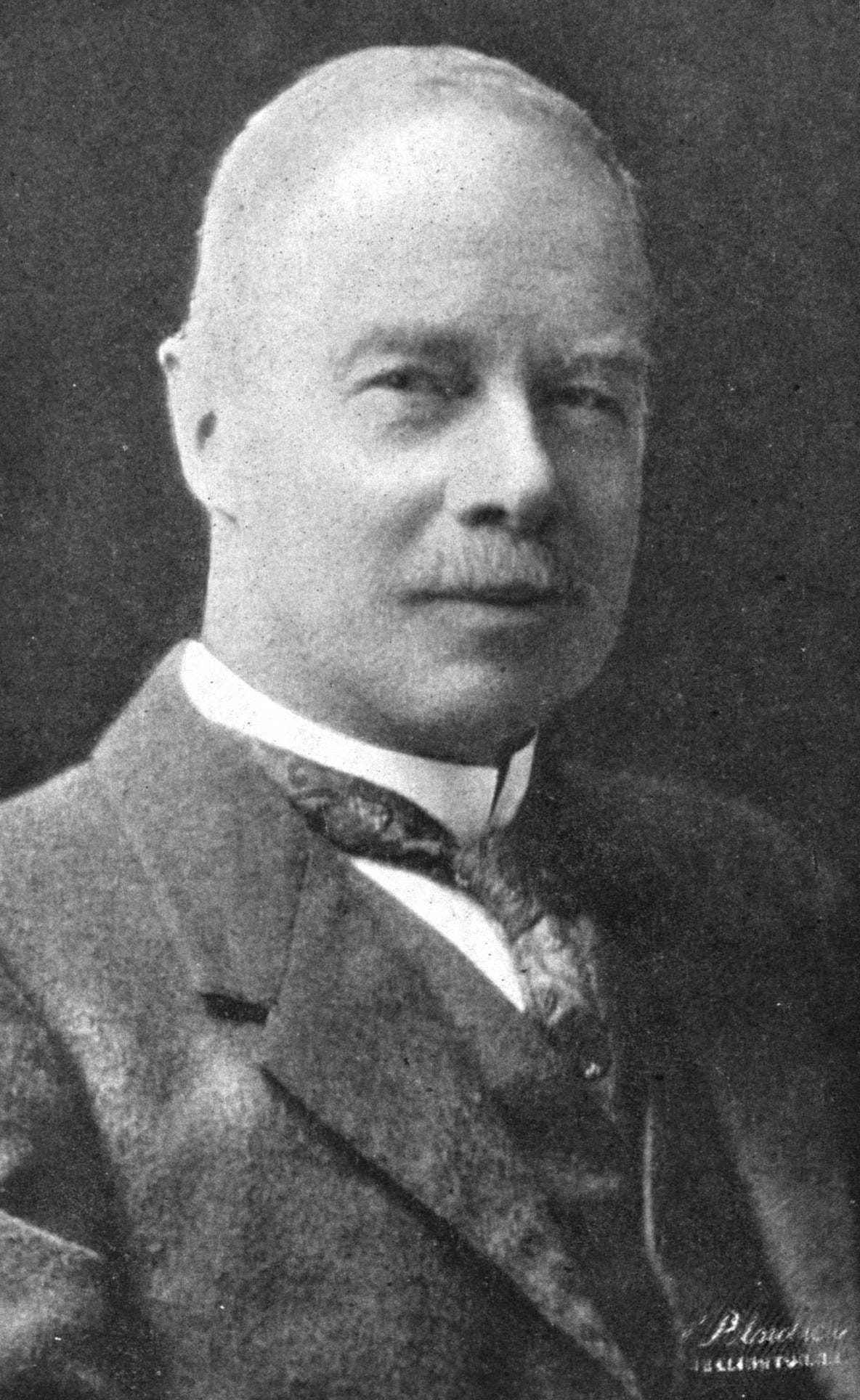
Hudson persevered, presenting another paper on the matter in 1898 but it was the English builder and outdoorsman William Willett (1856–1915) who really helped to bring the matter to the attention of the political establishment. He independently came up with the idea in 1907 after becoming annoyed that he had to cut his evening’s golfing short when dusk fell.
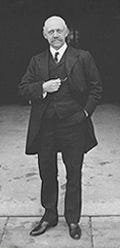
Willett published a pamphlet entitled “The Waste of Daylight” laying out his ideas and his cause was taken up by the Liberal MP Robert Pearce who put a bill before Parliament in 1908, alas to no success. What Willet proposed is essentially the system we have today:
Everyone appreciates the long light evenings. Everyone laments their shrinkage as Autumn approaches, and nearly everyone has given utterance to a regret that the clear bright light of early morning, during Spring and Summer months, is so seldom seen or used.
Nevertheless, Standard time remains so fixed, that for nearly half the year the sun shines for several hours each day, while we are asleep, and is rapidly nearing the horizon when we reach home after the work of the day is over. There then remains only a brief spell of declining daylight in which to spend the short period of leisure at our disposal.
NOW, if one of the hours of sunlight wasted in the morning could be added to the end of the day, many advantages would be gained by all, and especially by those who would spend in the open air, whatever time they might have at their disposal after the duties of the day have been discharged.
By a simple expedient, these advantages can be secured. If we will reduce the length of one Sunday, in the Spring, by 60 minutes, a loss of which no one would be conscious, we shall have 60 minutes more daylight after 6 o’clock, on each succeeding day, until the Autumn.
I therefore propose, that at 2 o’clock in the morning of the third Sunday in April, Standard time shall advance 60 minutes, and on the third Sunday in September, shall recede 60 minutes. We should then have one Sunday in April 23 hours long, and one Sunday in September 25 hours long. Having made up our minds to be satisfied, on one occasion, with a Sunday of 23 hours, tile advantages aimed at would follow automatically ; everything would go on just as it does now, except that the later hours of the day would bring more light with them.
Those who have travelled by sea, will remember how easily they accommodated themselves to the alterations of time on board ship, how they adjusted their watches, attended to the engagements of the day in correspondence therewith, and dismissed from their minds all recollection of the alterations that had been made. If this can take place at sea, day after day, without discomfort, may not a similar operation be possible on land. twice in the year?
The measure was adopted by some parts of Canada in 1908, but it was the First World War that really caused things to change. Austria-Hungry adopted DST in 1916, and Britain and most of its allies swiftly joined them, with the USA following the trend in 1918. Despite Hudson’s efforts New Zealand was a laggard, only enacting the Summer Time Act in 1927.
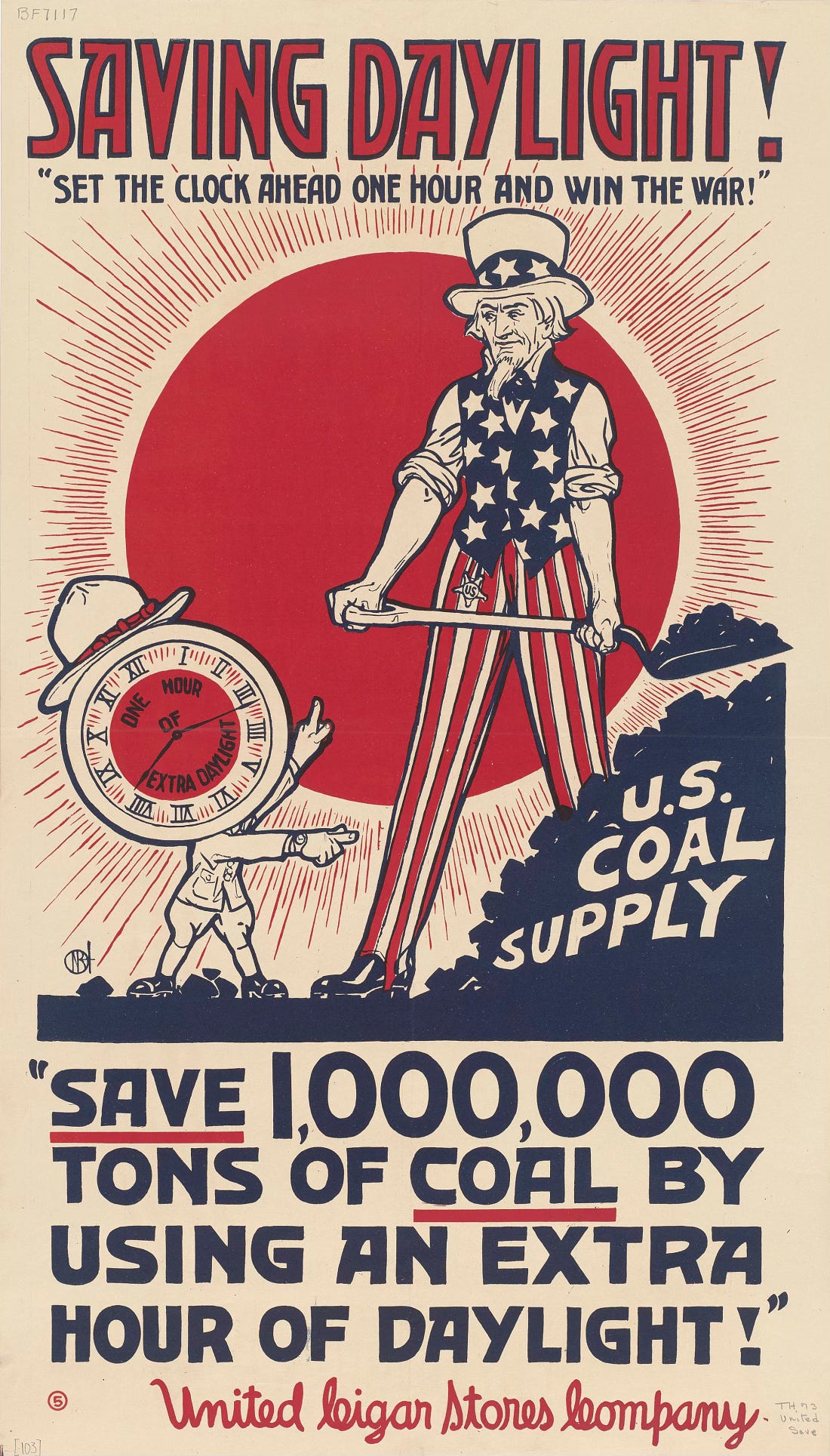
During WW2 the UK adopted “Double Summer Time” meaning that it was BST from October to March with the clocks advanced an additional hour in April to September. In the USA they simply stuck to DST the whole year around during the war, but returned to normal after the end of the conflict. In January 1974 Richard Nixon signed a law resurrecting this war-time change and making it permanent to much consternation, and his successor, Gerald Ford, repealed it in October of the same year.
It is usually said that the group most benefitting from DST is farmers, but this really doesn’t seem to be the case. Very much like the agricultural workers of two thousand years ago, their working days are driven by the sun, not clocks (it isn’t as though the cows have another meeting to go to at 11am).
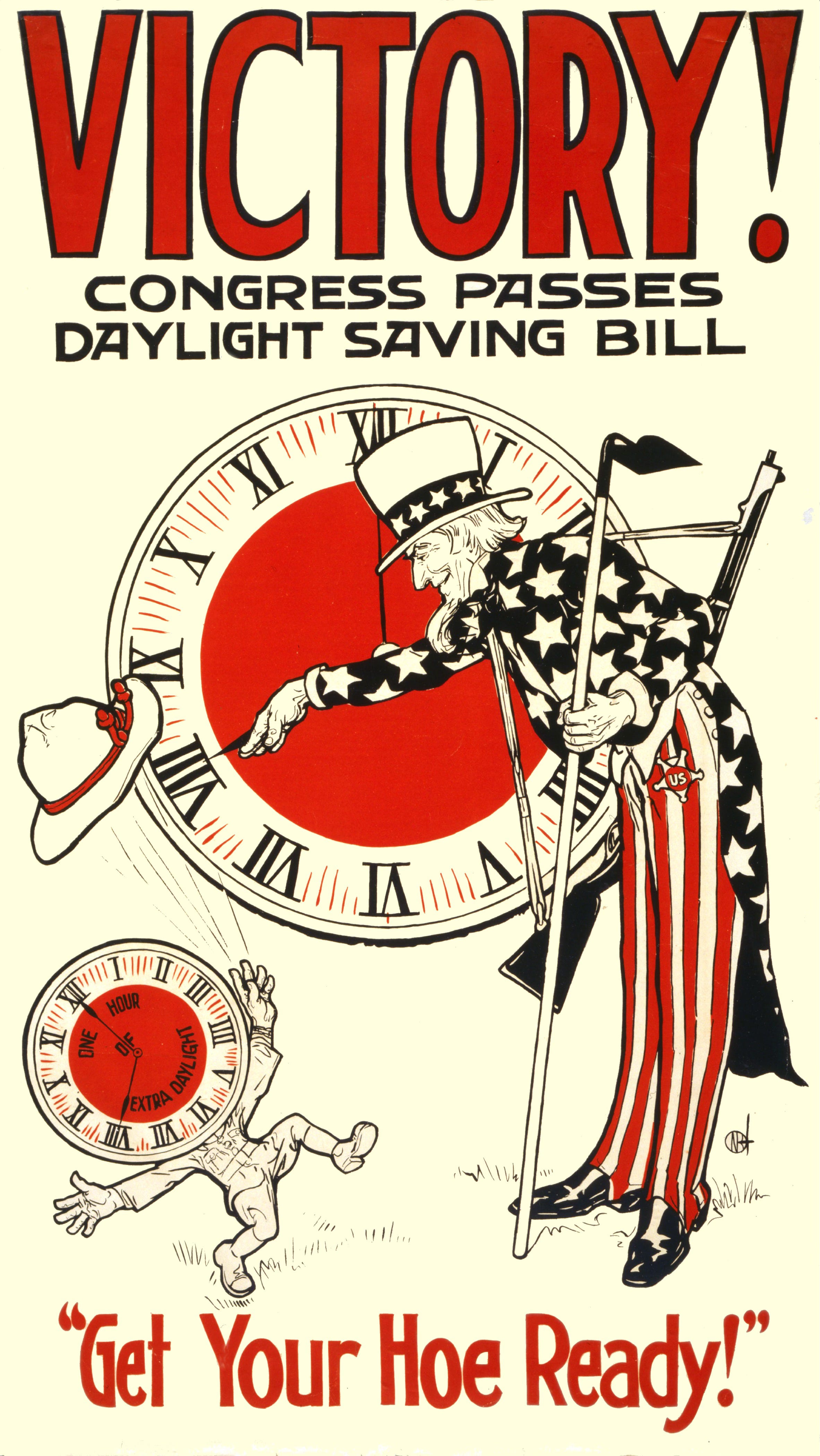
A meta-analysis in 2007 found that DST resulted in electricity savings of 0.3% during the days on which it was applied, but these benefits seem likely to be offset by other costs. The change to circadian rhythms by the changing of the clocks has, for example, been estimated to cause 30 deaths a year in the USA and increase the incidence of heart attacks and obesity. Traffic collisions seem to increase in the UK and the USA, but not so much elsewhere. On the plus side DST does seem to increase participation in sport and other outdoors activities. The issue remains politically charged, with some advocating for its abolition and others its year-round enactment. I am more of a night-owl than I am a morning person, so personally I am happy to trade an hour’s lost sleep for more light to go walking in the evenings, though I realise that many readers of this piece will have opposing views!
Yup, I know that he is actually satirising more than just this in the letter, but let’s just concern ourselves with these for now.
Yes, he is exaggerating here for comic effect.
Except the phrase was first published in James Howell’s Paroimiographia (1659)
Well kinda as we have already seen.